Are your undefined pressure Centers taking you offline while you’re online?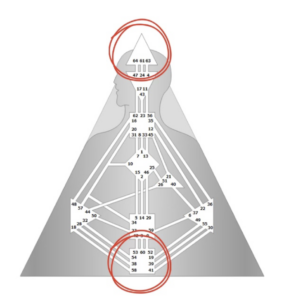
AI didn’t create our relationship - and mental addiction - to certainty. It just removed the waiting period.
For people with undefined pressure centers (the Head/Crown and the Root) this matters more than most realize. AI doesn’t merely answer questions; it interacts directly with the mechanics of pressure, amplification, and authority. Used unconsciously, it accelerates not-self strategies. Used correctly, it can be neutral or even supportive. The difference is not the tool. It’s where the question is coming from and how we approach using it.
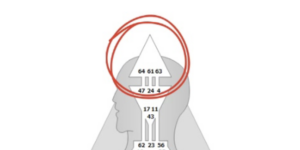
In Human Design terms, the undefined Head is not here to answer every question that arises. Its wisdom is discernment: knowing which questions are worth paying attention to at all. When that wisdom is offline, mental pressure becomes indistinguishable from relevance. Every question feels important. Every curiosity feels urgent.
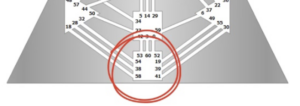
Add an undefined Root, and the pressure compounds. Now there’s not only mental pressure to figure things out, but adrenal pressure to do something with the information - quickly. This is the classic pressure sandwich: think faster, act faster, resolve the tension now.
AI slots perfectly into this dynamic.
From the not-self, AI functions as a pressure valve. Questions that once had to be held internally can now be off-loaded instantly. That creates temporary relief. The nervous system relaxes. The mind feels organized. And the system quietly learns a new pattern: I don’t have to tolerate uncertainty.
That’s where things can start to slide because relief is not the same as clarity.
When AI is used before clarity of intent, or even in lieu of, our inner authority - before emotional clarity, sacral response, or other inner awareness - it becomes a certainty engine. Questions lead to answers, answers lead to more questions, and soon the person is moving through rabbit holes that feel productive but never actually resolve. The mind stays busy. The pressure never truly lifts.
This is not a failure of information. It’s a failure of sequencing and frequency.
Human Design is explicit about this: the mind is not the decision-maker.
For instance, for someone with emotional authority, clarity comes with time, not explanation. No amount of thinking, researching, or refining the question will replace waiting for the emotional wave to settle.
AI doesn’t know that. It responds instantly. And that instant response can train the system out of its own authority.
The shadow (fear frequency) of the undefined Head Center is the belief that questions must be answered to be safe. The shadow of the Ajna Center (just below the Head) is the belief that certainty equals stability. Together, they form a subtle but powerful attachment to knowing - especially when uncertainty is experienced as destabilizing.
From an attachment lens, this maps most clearly onto anxious and disorganized patterns, but the mechanics are energetic first. The attachment system latches onto certainty because certainty promises regulation. AI offers certainty on demand.
That’s the trap.
Used unconsciously, AI reinforces not-self (fear frequency) patterns:
• mental spinning disguised as insight
• urgency masquerading as clarity
• confirmation bias mistaken for truth
• dependency on external coherence (or whom/what ever seems to have the most certainty)
Used consciously, AI becomes something very different.
Healthy AI use respects authority mechanics. It can help gain clarity, but only if the body’s wisdom and awareness is not abdicated. It supports cognition without hijacking decision-making. It helps organize, synthesize, and execute - but does not decide.
A simple rule holds across each Design type and their respective authority’s:
AI can support the mind. It cannot replace inner authority. It can be a powerful outer ‘authority’ - offering information for the seeker to respond to and insights that feel ‘right’ or unlock perspectives the seeker never considered - but we, as seekers, must test these insights or ah-ha’s ourselves, through action or listening to our own intuition vs. just taking what we read as truth.
This means one of the most important aspects of AI literacy isn’t just better prompts - it’s better timing or sequencing. And by better timing, I mean having enough clarity to know whether we are asking AI for information from our not-self or fear frequency, or first getting grounded enough to ask from a higher frequency - a place of curiosity, unattached to getting the ‘right’ answer or an answer that will “fix” us and the discomfort of our uncertainty.
Not-self questions sound like:
• “What should I do?”
• “Which option is right?”
• “Can you tell me if this is correct?”
Authority-aligned questions sound like:
• “What assumptions am I making?”
• “What information here is neutral vs emotionally charged?”
• “What does not need to be decided yet?”
• “What are multiple plausible interpretations?”
These questions reintroduce friction. Friction is often what we are trying to avoid because it’s uncomfortable to be in the not-knowing. The ‘aligned’ questions above slow the system down enough for authority to come back online. They can prevent AI from becoming an echo chamber and instead turn it into a reflective surface.
AI does not erode sovereignty on its own. It exposes where sovereignty was already compromised by pressure, fear of uncertainty, and mistrust of inner timing and inner awareness.
For people with undefined pressure centers, AI can be a mirror. It shows you how you relate to questions, urgency, and not-knowing. If you use it to escape uncertainty, it will amplify confusion. If you use it as a means of gaining clarity and then taking action to test that insight or information through your body, it can be genuinely useful.
I often tell my clients that true clarity is not about seeing the way, it’s about changing the way we see. If we approach AI, or any tool like Astrology, Tarot, Human Design, the Akashic Records, a psychic, or even a therapist/coach with the mindset and energy of “tell me what to do or what’s right/wrong about me or the way I’m doing things”, we’ll get answers that reflect the energy and underlying intention of the question vs. information we can truly use; or we may even dismiss a higher frequency response that actually asks us to listen deeply within ourselves or do something that’s uncomfortable in order to actually change the situation!
It’s about the way we approach the tool, and the energetic intention behind it. If we don’t have clarity on that first, we can get entranced and sidetracked with all the information at our fingertips without actually checking if the information we are receiving is factually correct*, or even something that is relevant to us personally.
*I often see this with people using AI or ChatGPT to ask questions about Human Design. They know enough to ask a question, but not enough to know whether the information they are getting is actually correct, or fully relevant to their personal chart and how it relates to all the other aspects of their Design. This is something that (for now!) only a human who is trained in Design and who can not only pick up on the energy and intention behind the question being asked, but also synthesize all the other aspects of their chart and lived experience that inform the pattern being explored.
Information can be so helpful - and truly useful. And AI is a veritable font of information! It can help us organize information and see options we didn’t see before. But how we approach gathering that information, and the mindset we are in as we gather that information is equally, if not more, important than the information itself.
In Design, sorting through reams, and energetic streams, of data we are picking up on all day long is pretty simple: It’s returning to our Strategy and Authority - and not out-sourcing our own inner wisdom and knowing, no matter how clever, compelling, or interesting the information is that we are taking in.
Kris